HOUSTON (AP) — The Artemis II astronauts are now forever intertwined with Apollo 8.
A day after the historic lunar flyaround, NASA on Tuesday released striking new photos taken by the U.S.-Canadian crew.
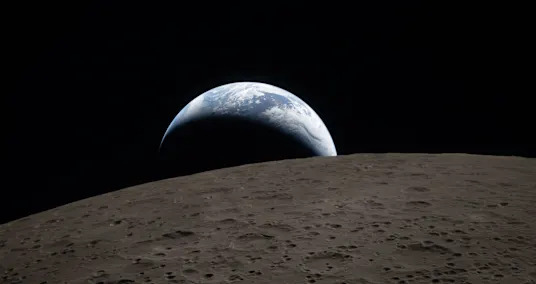
The four astronauts channeled Apollo 8’s famous Earthrise shot from 1968 with their own: Earthset, showing our planet setting behind the gray, pockmarked moon. Another photo captures the total solar eclipse that occurred when the moon blocked the sun from the crew’s perspective.
The three Americans and one Canadian are now headed home, with a splashdown in the Pacific set for Friday. In the meantime, scientists at Houston's Mission Control are poring over the stream of moon photos beaming down.
Apollo 8's three astronauts became the world's first lunar visitors, orbiting the moon on Christmas Eve 1968. Their Earthrise shot became a symbol of the modern-day environmental movement.
Artemis II marks NASA's first return to the moon with astronauts — a critical step toward a lunar landing by another crew in two years.
___
The Associated Press Health and Science Department receives support from the Howard Hughes Medical Institute’s Department of Science Education and the Robert Wood Johnson Foundation. The AP is solely responsible for all content.
LATEST POSTS
- 1
 Spots to Go Hang Floating
 - 2Indian Health Service is digging out of decades-old construction backlog for medical buildings
- 3Watch This Glacier Race into the Sea
- 4Merck sees over $5 billion opportunity in Cidara's experimental flu drug
- 5Figure out How to Use the Experience of a Fender bender Legal counselor for Your Potential benefit



- A Manual for Well known Western television Series
- The most effective method to Consummate the Specialty of Handshaking in Business and Group environments
- Zelensky names spy chief to head presidential office after corruption row
- Land Rover Just Unveiled Its Dakar Rally Defender
- Vote in favor of Your #1 sort of pie
- Eating ultra-processed foods could raise precancerous polyp risk for women under 50, according to research
- Can humans have babies in space? It may be harder than expected
- Scientists document a death from a meat allergy tied to certain ticks
- How we came to be: Scientists get first look at the evolution of early complex animals